

Professional Learning
Treating science teachers as scientists and engineers
About
"It's rigorous, joyful, and deeply aligned with preparing students for the science and technology-centric world they will inherit."
STEMACES provides two types of professional learning opportunities for teachers in the program:
- A week-long, face-to-face Summer Institute where teachers are provided lodging, and meals, and can immerse themselves in the methods and materials that enable the STEMACES activities to bring science and engineering to life.
- Shorter, virtual/hybrid, school-year professional learning sessions where teachers refresh skills, share teaching strategies, and analyze student work. The sessions are scheduled according to need, and teachers can request up to eight during the school year.
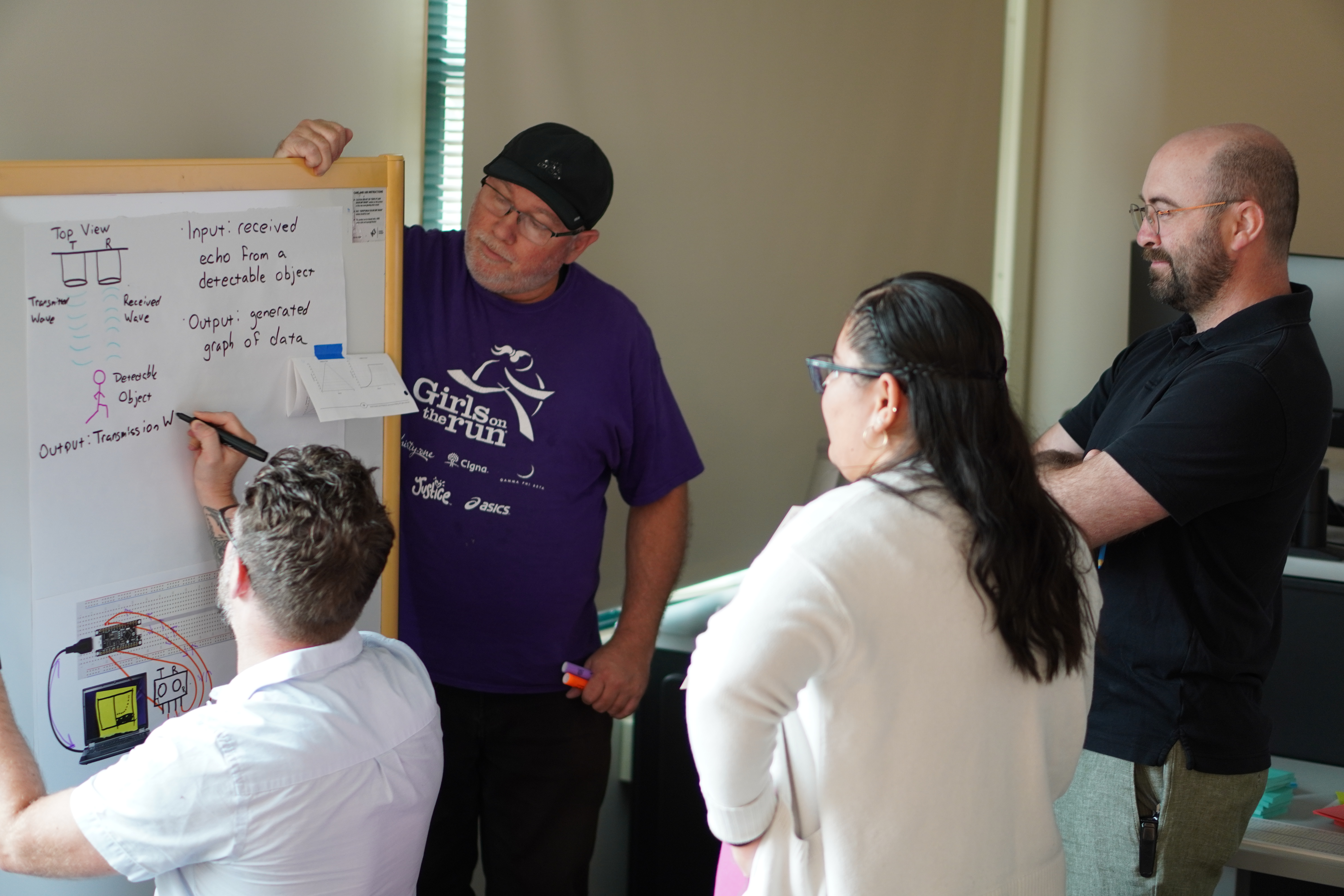
Collaborative professional development session
Immersive Learning
Rather than relying on the traditional "sit and get training" method of professional learning, STEMACES professional development immerses teachers in adult versions of the same challenges students will experience. Over the course of the week, teachers engage with the STEMACES platform to model systems, then design, build, test, and troubleshoot the tools they go on to use to collect and analyze data. Embedded throughout, teachers also examine student curricular materials, anticipate student needs, and plan implementation for their own classrooms with support through every step.
This approach is intentionally designed to strengthen teachers' skills across two research-based frameworks:
- Computational Thinking in Mathematics and Science (Weintrop et al., 2016)
- TPACK: Technological Pedagogical Content Knowledge (Mishra & Koehler, 2006)
Teachers don't just learn about computational thinking and technology integration—they experience it, practice it, are metacognitive about their experiences with it, and build the confidence to support their students in developing it themselves.
The STEMACES Summer Institute Evaluation Report, written by Kim Luttgen, Linlin Li, and Kevin Huang, documents observations, participant feedback, and findings from the STEMACES professional learning institutes in Texas and California in 2025.
Hardware + software = real science learning that engages students
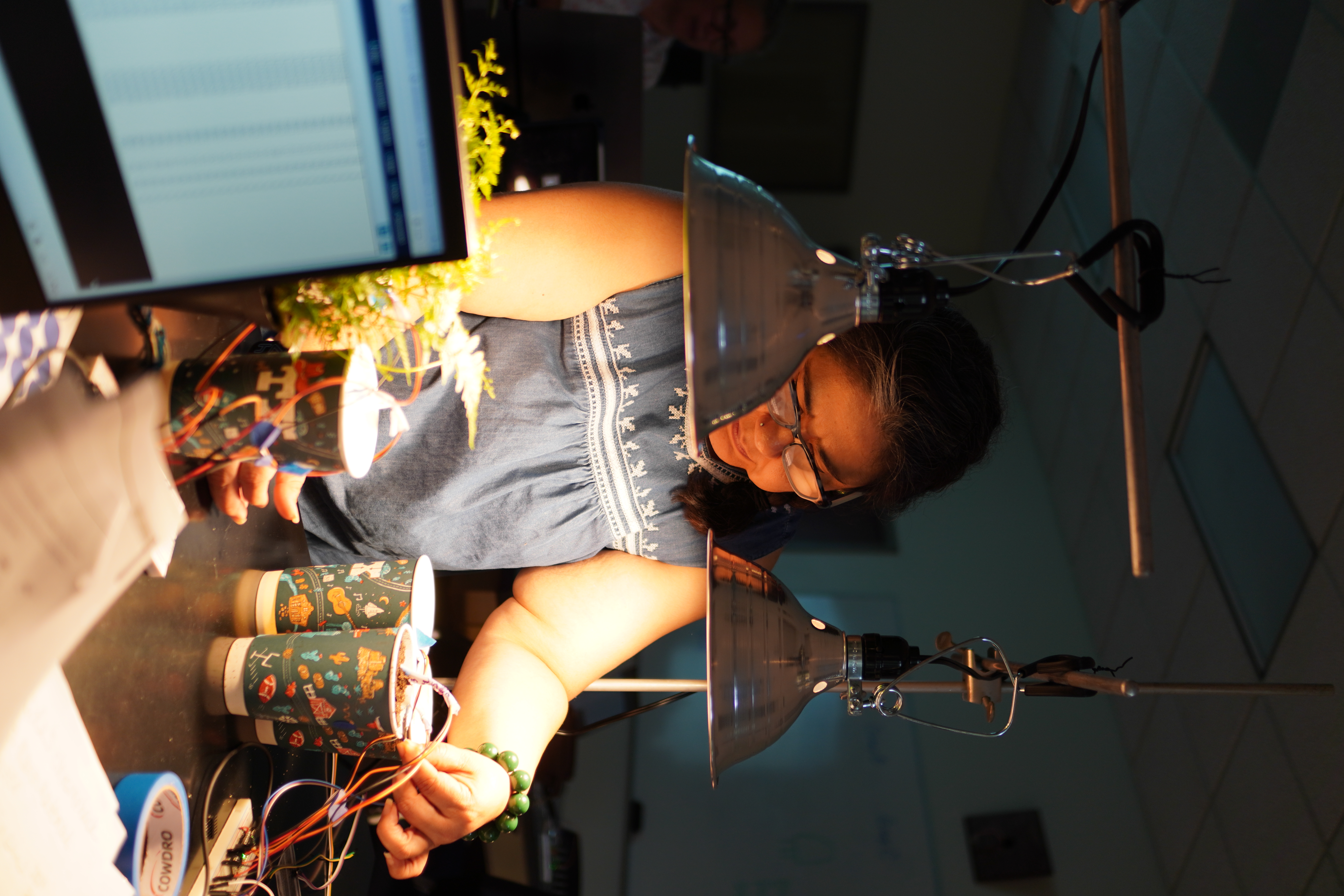
Professional Development in Action
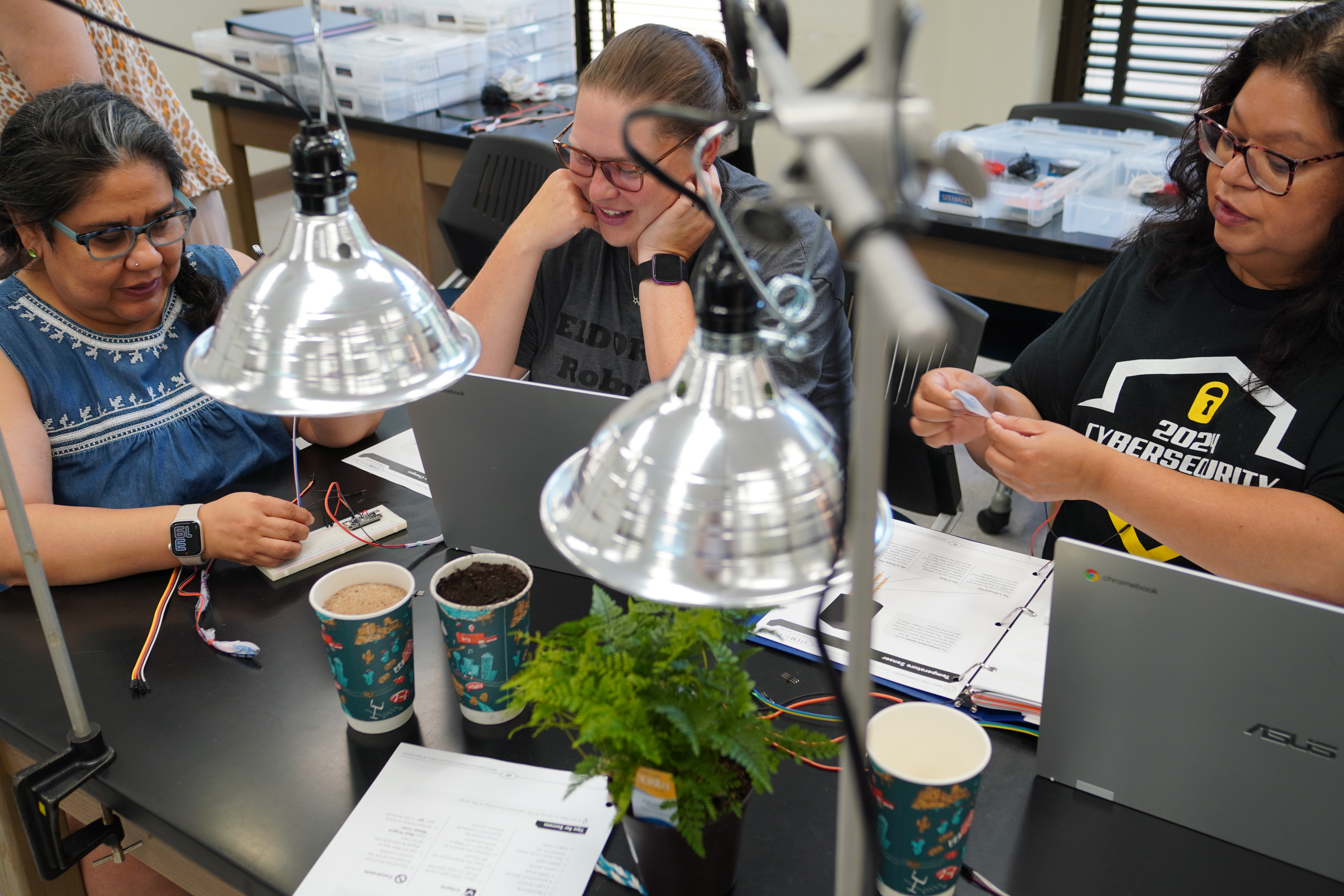
A standout feature of STEMACES professional learning is that teachers first solve real engineering challenges themselves—supported by facilitators. Teachers use a web-based programming environment with a set of actual electronics we call the LbyM platform. The platform includes a breadboard and microcontroller connected to a computer running a browser-based Web App with modifiable scripts. Teachers then take that lived experience back to their classrooms to replicate the same kind of learning with students. Additional electronics used during STEMACES professional learning to authentically address challenges include:
Additional electronics used during STEMACES professional learning to authentically address challenges include:
- Wires, LEDs, and resistors
- Light, temperature, and ultrasonic sensors
- Data visualization and analysis tools like CODAP
- Virtual learning labs like PhET
This isn't "simulated" science. It's teachers building systems, generating real data, and using evidence to explain phenomena—so they can confidently design and facilitate the same kind of experience for students. That teacher-first foundation is what makes it possible for them to support young people to engage in authentic scientific and engineering work and build the literacy and skills they need to understand the systems and phenomena that move the world.
A learning sequence that builds skill, confidence, and classroom readiness
Across engineering design challenges, modeling tasks, and science investigations, teachers progress from simple circuits (like designing their own connectivity testers) to more complex systems that employ sensors, control outputs, and support investigations.
Teachers practice:
- Engineering design with criteria, constraints, and datasheets
- Coding and debugging in an accessible, beginner-friendly environment
- Systems thinking (inputs, outputs, interactions, information flow)
- Modeling and revision through consensus system models and iterative modeling and feedback cycles
- Data practices, including collecting "messy" real-world sensor data and making sense of it
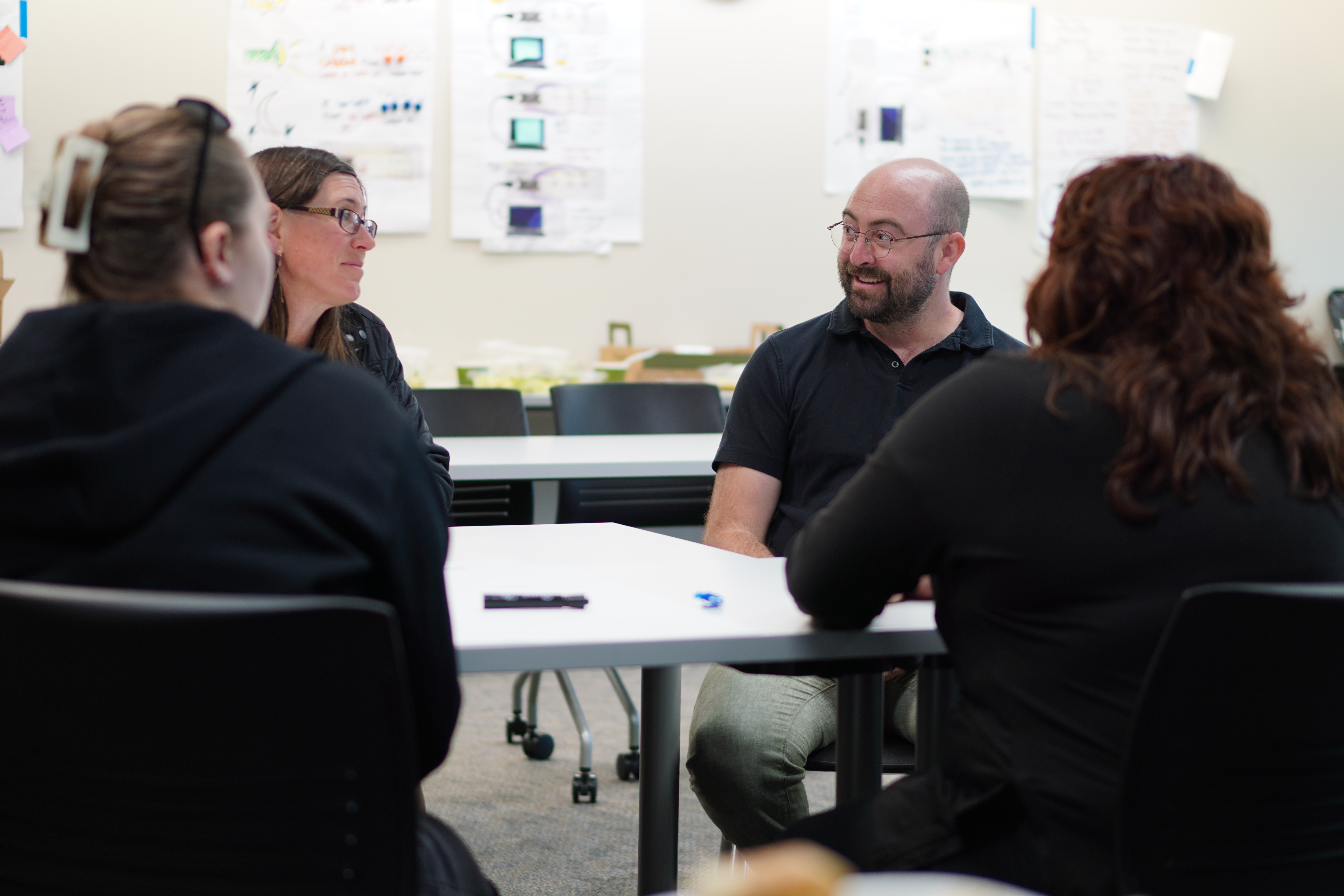
Building Skills Through Practice
Facilitation that makes risk-taking feel safe—and successful
Supportive Learning Environment
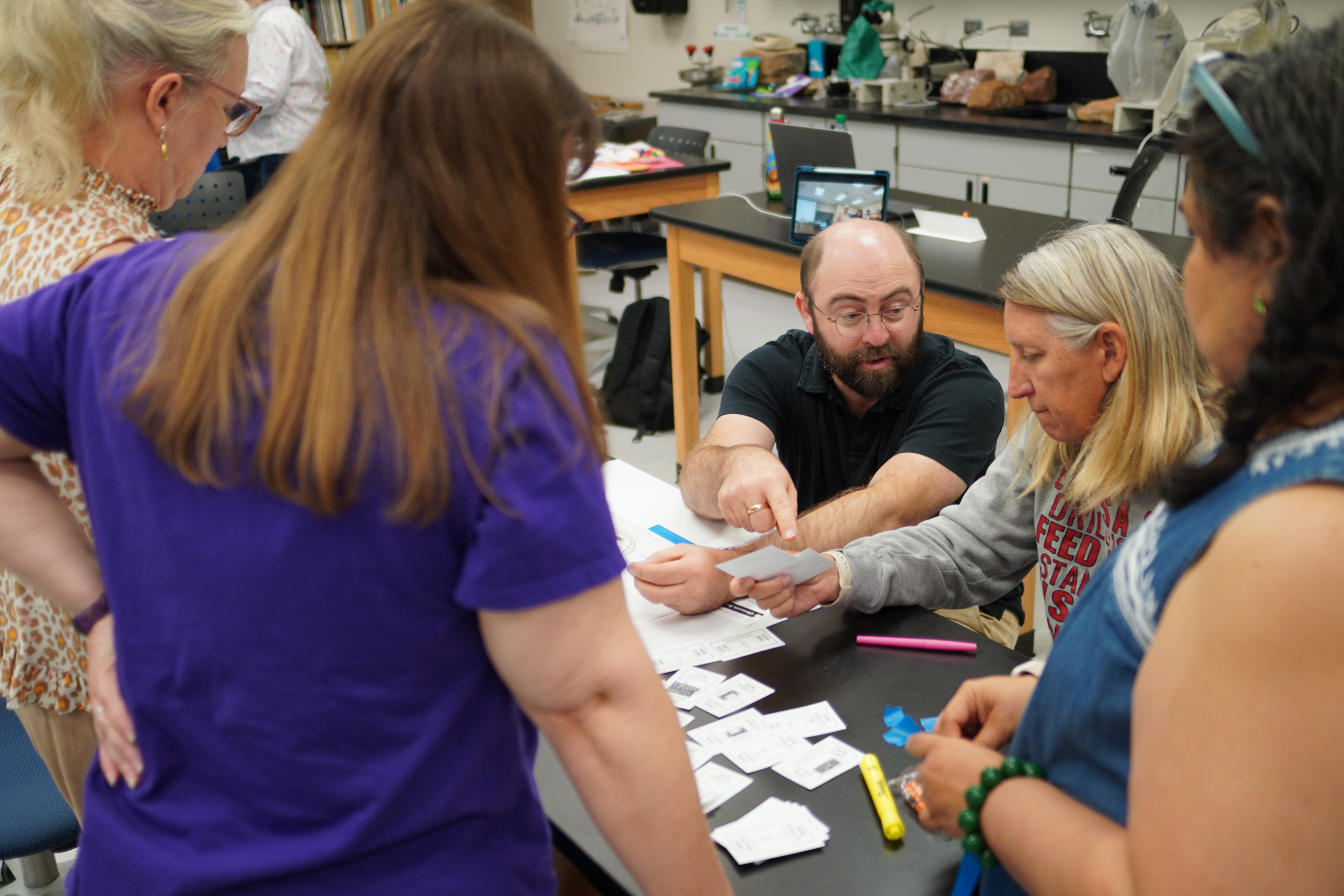
Facilitation is a defining strength of STEMACES professional development. The professional learning sessions create a climate where teachers feel empowered to try, revise, and persist. Facilitators model a "guide on the side" approach that invites participants to find answers through observation, collaboration, and tools like datasheets—mirroring the learning culture that is proven to be most impactful for students and their science learning.
Participating teachers have consistently described the professional learning environment as supportive and motivating—one noting that encouragement and collaboration created "a sense of safety to face my fears and take risks." This matters: when teachers experience productive struggle with support, they are better prepared to cultivate that same resilience and agency in their students.
Strong participant satisfaction and readiness to implement
Findings from surveys taken after the 2025 Summer Institute were overwhelmingly positive. Across activities, ratings clustered in the top categories ("Very Useful" and "Game Changing"), with no participants selecting "Not useful at all." Overall satisfaction was extremely high, with 92% rating the institute "Excellent" and the remaining 8% "Very Good."
By the third day of learning during the 2025 Summer Institute, teachers needed minimal help setting up and running increasingly sophisticated investigations—an important indicator that the professional learning design builds real competence, not just awareness.
Engaged and Empowered Educators
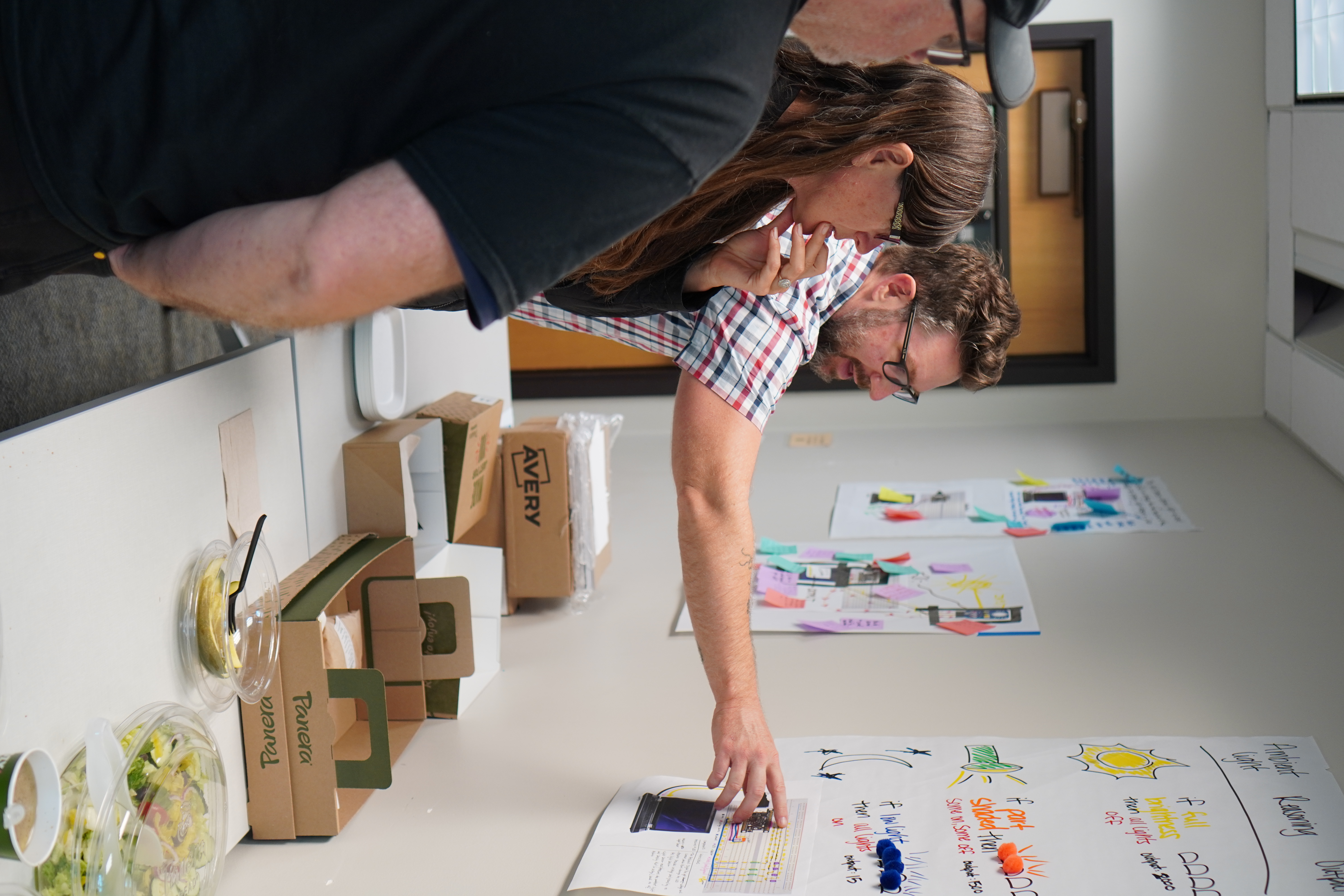
"This was hands-down the BEST professional development opportunity I have ever attended. I am so excited about giving our students these opportunities to learn."
Transforming Professional Learning
STEMACES professional development stands out because it doesn't separate science learning from the practices that humans use to make sense of phenomena. Teachers learn to guide students through engineering design, computational thinking, systems modeling, and data analysis—powered by a platform that is flexible, balances simplicity with customizability, and collects real-world data.
To read more about the first STEMACES Summer Institute, Read a summary of findings from WestEd.